

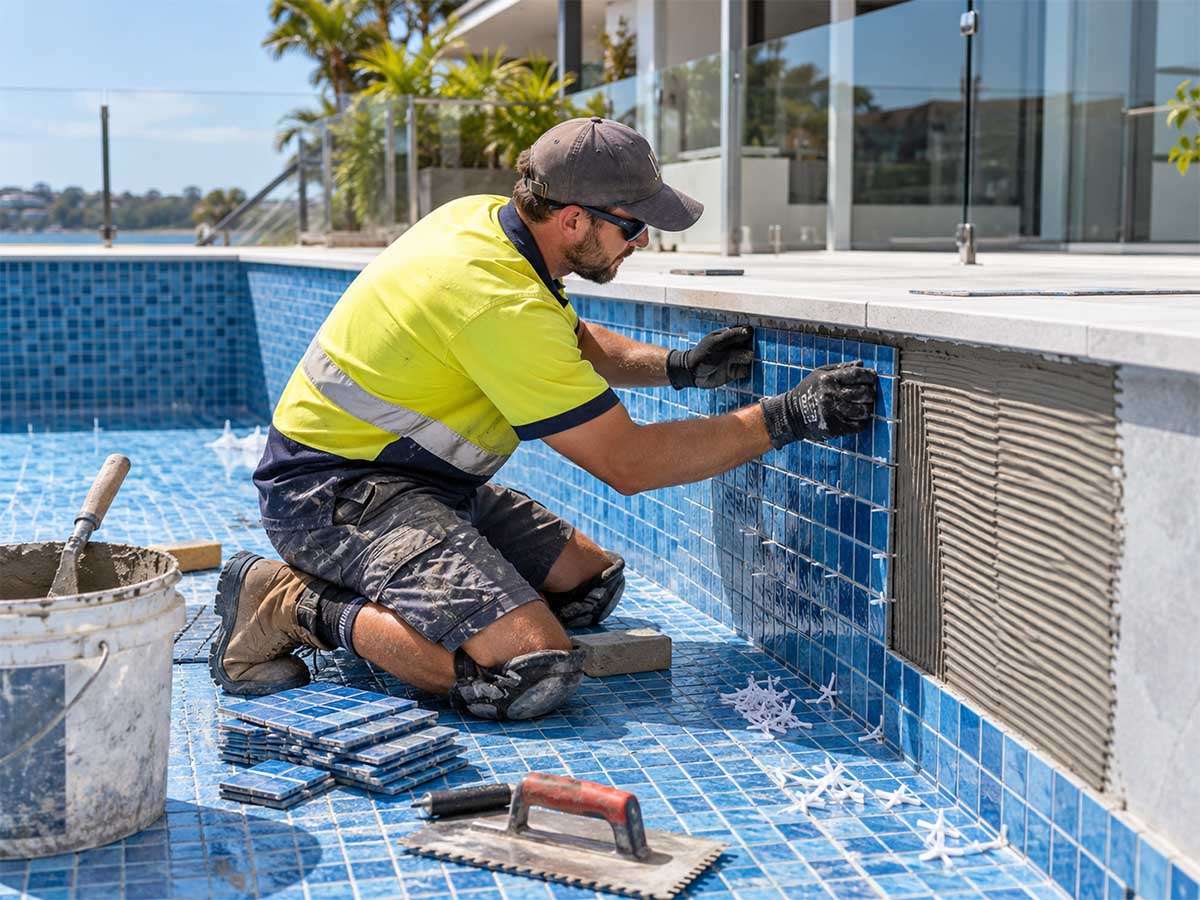
Choosing tiles for a swimming pool isn’t just about finding a colour or finish that looks good. In wet areas, the wrong tile can quickly become slippery, particularly around pool steps, ledges, coping and surrounding walkways.
Pool surfaces are regularly exposed to water, sunscreen, body oils and cleaning chemicals. A tile that feels perfectly safe when dry may perform very differently once it gets wet.
Experienced Swimming Pool Tilers take all of these conditions into account. Along with appearance, professional pool tiling company consider slip resistance, barefoot comfort, drainage, durability, chemical exposure and exactly where each tile will be installed.
Why Tilers and Pool Owners Prioritise Slip Resistance
Water is unavoidable around a swimming pool, so choosing surfaces with suitable traction is an important part of creating a practical pool area.
However, not every part of a pool has the same requirements. A tile that works well on an external pool surround may not be the right choice for submerged steps, shallow ledges, beach entries or spa areas.
Before recommending a product, an experienced swimming pool tile installer will typically consider:
- Wet-surface traction
- Barefoot comfort
- Surface texture
- Drainage and falls
- Resistance to pool chemicals
- Cleaning and maintenance requirements
- The location of the tile
- Relevant slip-resistance test results
Looking at the complete environment helps create a pool tiling system that performs well without compromising the overall design.
Choosing Slip-Resistant Tiles for Pool Steps
Pool steps deserve particular attention because swimmers are entering and leaving the water while changing direction and shifting their body weight.
For these areas, pool tile specialists generally look for tiles that provide dependable traction in wet, barefoot conditions without being excessively rough.
Suitable tiles for pool steps may feature:
- Textured or structured surfaces
- Appropriate wet-area slip resistance
- A finish that remains comfortable under bare feet
- Durable edges
- Resistance to chlorine, salt and pool chemicals
Visibility matters too. Professional pool tiling contractors may recommend contrasting colours, borders or patterns around step edges to make changes in level easier to identify through the water.
Finding the Right Tiles for Pool Ledges and Shallow Areas
Tanning ledges, shallow shelves, beach entries and submerged benches can remain wet for long periods. These areas require a careful balance between traction and comfort.
Going for the roughest tile available isn’t necessarily the answer. An aggressive texture might offer plenty of grip, but it can be uncomfortable when people sit, kneel or walk barefoot across the surface.
A well-selected pool ledge tile should provide:
- Suitable traction under wet feet
- Comfortable barefoot contact
- Straightforward cleaning
- Resistance to pool chemicals
- Long-term durability
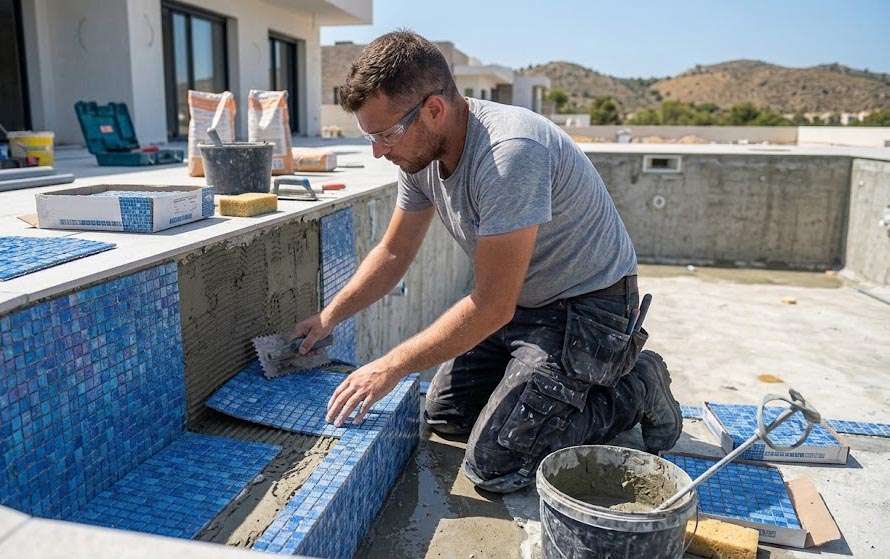
Professional Brisbane or Gold Coast swimming pool tiling services may also recommend smaller-format tiles or mosaics for certain areas. The additional grout joints create more surface variation and make it easier to tile curves, slopes, steps and unusual pool shapes neatly.
Slip-Resistant Tiles for Pool Surrounds
Pool surrounds constantly transition between wet and dry conditions. Splashes, swimmers leaving the water and changing weather can all affect how the surface performs.
Experienced pool surround tilers generally select products designed for exterior wet areas rather than assuming that any outdoor tile will be suitable beside a swimming pool.
Depending on the project, options can include:
- Textured porcelain tiles
- Slip-resistant ceramic tiles
- Natural stone with a suitable surface finish
- Purpose-made pool paving
- Exterior pool coping tiles
The right choice depends on the pool design, drainage, pedestrian traffic, exposure and the specific requirements of the site.
For Gold Coast swimming pools, outdoor conditions also matter. Strong sun, heavy rain and year-round use can put pool surrounds through demanding conditions, so material selection needs to consider more than appearance alone.
Understanding Pool Tile Slip-Resistance Ratings
You can’t reliably determine a tile’s slip resistance simply by running your hand across its surface.
Reputable manufacturers can provide technical information and slip-resistance classifications based on recognised testing methods. In Australia, AS 4586 is commonly referenced for the slip resistance classification of new pedestrian surface materials.
The appropriate classification depends on where and how a surface will be used. This distinction is particularly relevant to swimming pool tile contractor, as pool environments can include both wet-footwear areas and surfaces regularly used by barefoot swimmers.
A professional tile installer should check the manufacturer’s technical documentation and ensure the selected product is appropriate for its intended application.
Barefoot Pool Areas Require Extra Attention
Most people don’t wear shoes in or immediately around a swimming pool. That makes barefoot performance an important consideration when choosing pool tiles.
Areas that may require particular attention include:
- Pool steps
- Beach entries
- Pool ramps
- Shallow shelves and ledges
- Spa surrounds
- Pool decks
- Changing areas
- Frequently or continuously wet walkways
Experienced pool tile contractors look beyond marketing terms such as “non-slip”, “anti-slip” or “outdoor tile”. Manufacturer specifications and appropriate testing information provide a much better basis for choosing a suitable product.
Rougher Doesn’t Always Mean Better
It’s easy to assume that the roughest tile will automatically be the safest choice around a pool. In practice, pool tiling requires more balance. Very coarse surfaces can collect dirt, algae, sunscreen residue and other organic material. They can also become uncomfortable under bare feet and more difficult to keep clean.
Experienced residential tilers near you aim to balance slip resistance, barefoot comfort, cleanability, appearance and durability. Getting that balance right is particularly important in high-use environments such as apartment complexes, hotels, resorts, commercial pools and busy residential swimming pools.
How Tile Size Affects Pool Tiling
Tile size isn’t purely a design decision.
Smaller tiles and mosaics create more grout joints and can make it easier for swimming pool tile installers to follow curved walls, steps, benches, ramps and other detailed areas.
Larger tiles can create a clean, contemporary finish around pool surrounds, but they place greater importance on correct substrate preparation and installation.
Professional Swimming Pool Tilers also need to consider how tile size works with the required falls. Poorly planned large-format tiles can make it harder to maintain drainage or may contribute to uneven areas where water ponds.
Good Drainage Is Just as Important as the Tile
Even a quality slip-resistant tile can’t make up for poor drainage.
Pool surrounds need appropriate falls so water moves towards the intended drainage points instead of sitting on the finished surface.
Poor drainage can contribute to:
- Standing and ponding water
- Slippery areas
- Algae and organic growth
- Stained grout
- Higher cleaning requirements
- Moisture issues around adjoining structures
For this reason, a professional swimming pool tiling contractor looks at the entire installation rather than the tile in isolation. Substrate preparation, screeding, pool waterproofing, drainage, adhesives, tile installation, grout and movement joints all need to work together.
Pool Tiles Need to Handle Chemicals and Outdoor Conditions
Swimming pool tiles face a demanding environment. They’re exposed to much more than clean water. Depending on the pool and its location, surfaces may regularly encounter:
- Chlorine
- Pool cleaning chemicals
- UV exposure
- Heat or rain
- Repeated wetting and drying
Qualified residential or commercial tilers should check that the complete installation system is suitable for these conditions. That includes the tiles as well as adhesives, grout, waterproofing membranes, sealants and movement-joint materials.
This is especially important for outdoor tilers working on exposed Gold Coast swimming pools and surrounding entertaining areas.
Why Experienced Brisbane& Gold Coast Swimming Pool Tilers Make a Difference
Selecting the right tile is only one part of achieving a durable pool finish. The quality of the installation underneath and around those tiles matters just as much.
Experienced commercial or residential tilers can manage important details such as:
- Substrate preparation
- Swimming pool waterproofing and membrane interfaces
- Screeding and correct falls
- Tile set-out and layout
- Accurate cutting and detailing
- Pool coping installation
- Adhesive selection
- Grouting
- Movement joints
- Pool step detailing
- Drainage transitions
Even premium tiles can develop problems when the underlying installation isn’t right. Cracked or loose tiles, deteriorating grout, uneven finishes and ponding water can all be signs of problems elsewhere in the tiling system.
Working with experienced pool renovation tilers, pool tiling contractors and swimming pool tile specialists helps ensure the tiles, waterproofing, drainage and installation materials work together as a complete system.
Choosing the Right Pool Tiles for a Safe, Lasting Finish
There is no single tile that’s perfect for every part of a swimming pool.
Steps, submerged ledges, beach entries, coping and external surrounds all experience different conditions. The best results come from matching the tile’s characteristics to its location while considering slip resistance, barefoot comfort, drainage, maintenance, chemical resistance and durability.
For homeowners, builders and commercial property managers planning swimming pool tiling on the Gold Coast, working with experienced Brisbane Tilers can make the selection process much easier.
A professional outdoor tilers can assess the site, review the intended tiles and make sure the complete tiling and waterproofing system is suited to the pool environment — delivering a finish that looks great, performs properly and is built to last.
Recent Post
- Energy and Water Efficiency Innovations in Renovation Tiling Willow Vale
- Quality Renovation Tiling in Pacific Pines for Residential and Commercial Properties
- Signs You’ve Found a Reliable Brisbane Northside Tiler That Locals Trust
- Low-Maintenance Wall and Floor Tile Renovation for Busy Homes
- Luxury & Character Shower and Bathroom Tile Renovations in Kalinga, Brisbane
- How AS 3740–Compliant Bathroom Tilers in Bardon & Ashgrove Protect Your Home from Leaks
- Top Bathroom Tile Renovation Styles in Kenmore: From Matte Finishes to Seamless Waterproofing
- Brisbane & Gold Coast’s Leading Industrial Tiler: Here’s Why Asset & Facility Managers Trust Us
- How to Choose the Right Bathroom Tiler in Ferny Grove, Keperra, and Surrounding Areas
- Surfers Paradise homeowners are choosing outdoor tiling as the smart way to upgrade their properties