

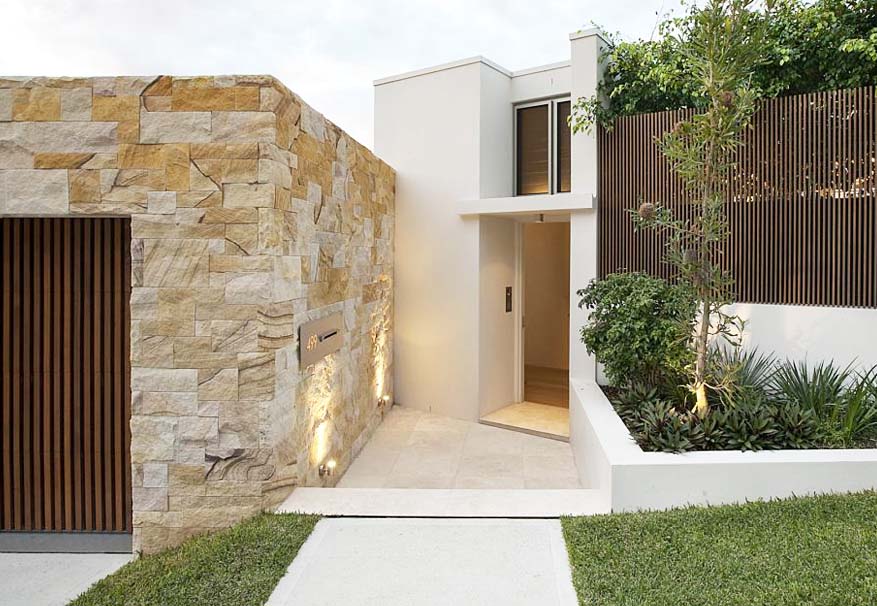
Living near the coast means enjoying fresh sea breezes and beautiful surroundings, but coastal weather can also take a toll on your home’s exterior. Salt in the air, high humidity, strong sunlight and heavy rainfall can gradually affect the appearance and condition of outdoor tiled surfaces.
For homeowners in Brisbane, the Gold Coast and surrounding areas, choosing the right materials for outdoor wall tiling is an important part of creating a finish that looks good and stands up to the elements. However, selecting durable tiles is only one part of the job. The adhesive, grout, movement joints, waterproofing and quality of installation all contribute to how well an exterior tiled wall performs over time.
If you’re planning to renovate an outdoor feature wall or install new exterior tiles, understanding the available materials can help you make a more informed decision.
1. Porcelain Tiles: A Practical Choice for Coastal Properties
Porcelain is one of the most dependable options for exterior wall tiling, particularly in areas exposed to moisture, salt air and changing weather conditions.

Its main advantage is its low water absorption. Porcelain tiles generally absorb no more than 0.5% water, making them less vulnerable to moisture penetration than many conventional ceramic tiles.
Why consider porcelain tiles?
- Low water absorption and good moisture resistance.
- Durable performance when exterior-rated products are selected.
- Good resistance to staining and coastal exposure.
- Available in different colours, textures and sizes.
- Easier to maintain than many porous natural stone materials.
- Can replicate the appearance of timber, concrete and natural stone.
Large-format porcelain tiles are especially appealing for modern coastal homes because they create a clean, contemporary finish.
However, larger tiles also require careful planning. Their weight, dimensions and exposure to temperature changes must be considered when choosing the installation system. For homeowners looking for a balance between appearance, durability and maintenance, exterior-rated porcelain is often a sensible starting point.
2. Natural Stone Tiles: Adding Character to Exterior Walls
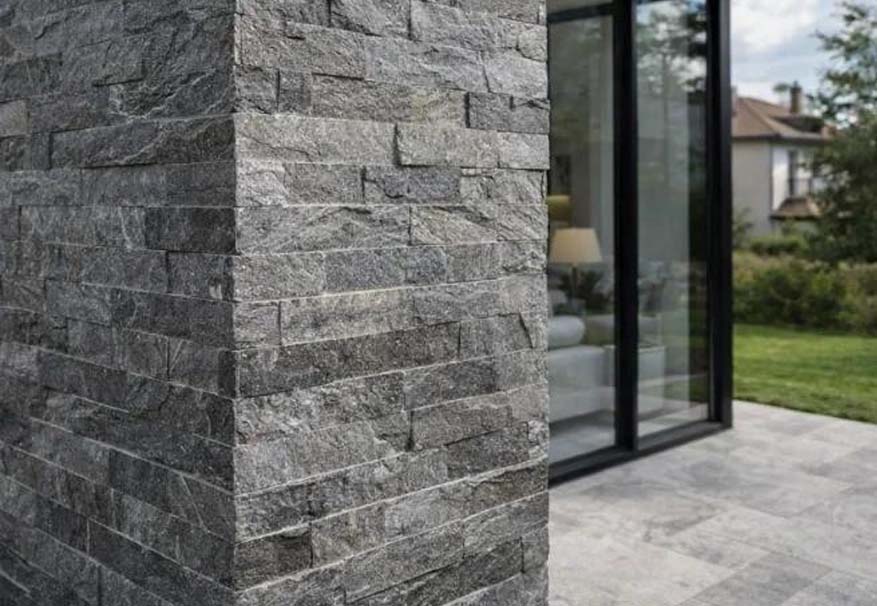
Natural stone brings a distinctive appearance that manufactured tiles cannot always replicate. Its natural colours and textures make it particularly attractive for outdoor feature walls, entrances and entertaining areas. Granite, selected slate and certain dense limestone products may be suitable for outdoor wall tiling-Gold Coast or any coastal environments.
However, not all natural stone performs equally well outdoors. Some stone products absorb more water than others, making them more vulnerable to staining, salt-related deterioration and weathering.
Before choosing natural stone, consider:
- How much moisture the stone absorbs.
- Its resistance to salt and weather exposure.
- Whether it is likely to stain or discolour.
- The type of adhesive and sealer required.
- Its weight and installation requirements.
Dense granite, for example, generally offers better resistance to demanding outdoor conditions than highly porous sandstone. Natural stone can create an attractive and lasting exterior finish, provided the selected product is suitable for the environment and installed using an appropriate fixing system.
3. Ceramic Tiles: An Option for Suitable Outdoor Applications
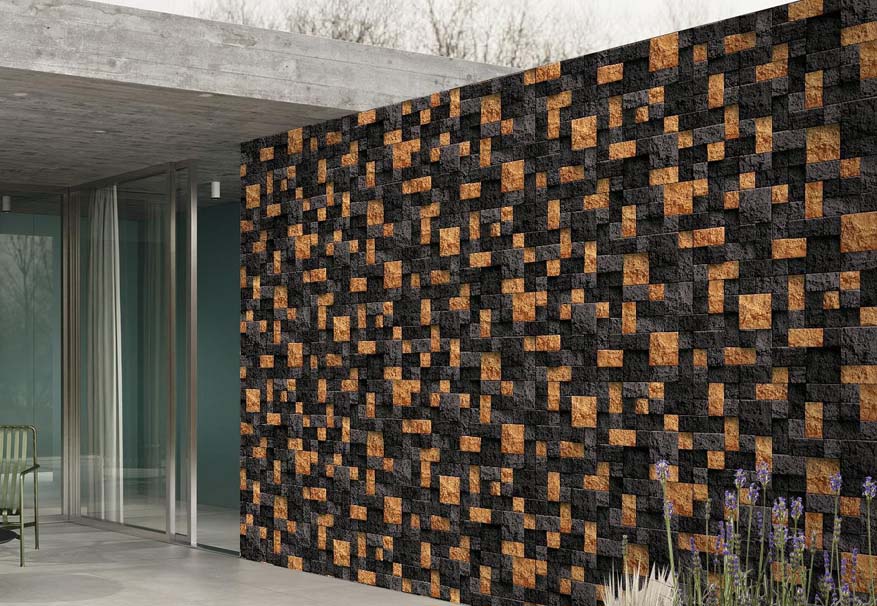
Ceramic tiles are widely used in residential tiling, but their suitability for exterior walls depends on the product. Many standard ceramic tiles absorb more moisture than porcelain, which can become a concern when exposed to coastal humidity, rain and salt-laden air.
This doesn’t mean ceramic tiles cannot be used outdoors. It simply means homeowners need to choose products specifically designed and approved for exterior applications.
Before installation, check whether the ceramic tile can withstand moisture exposure, temperature changes and outdoor weather conditions. Tiles intended only for indoor walls should not automatically be used for exterior wall tiling. Selecting an unsuitable ceramic product may lead to premature deterioration and additional maintenance.
4. Glass Mosaic Tiles: Decorative Finishes for Outdoor Walls
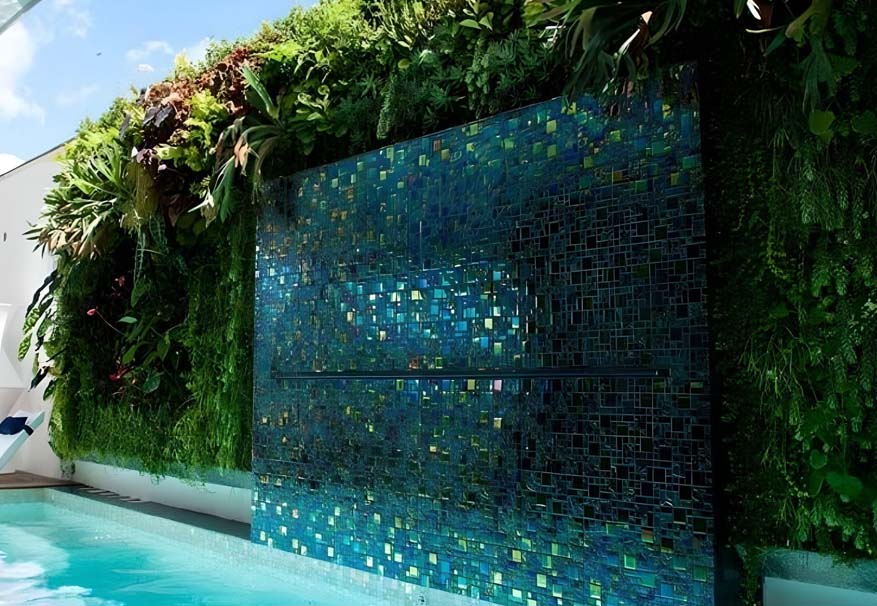
If you’re looking to add colour or a distinctive design to an outdoor wall, glass mosaic tiles may be worth considering.
These tiles are often used for decorative features, architectural accents and smaller tiled sections. Glass itself is non-porous, which means it does not absorb water in the same way as many natural stone materials.
However, the success of an exterior glass mosaic installation depends heavily on the adhesive system. The adhesive must be compatible with the glass tile, its backing material and the wall substrate. It must also be suitable for the temperature changes and movement associated with outdoor conditions.
For this reason, glass mosaics should be installed using products specifically approved for the intended exterior application.
5. Slate Tiles: Natural Texture and Character
Slate brings a rich, organic finish that few other materials can match. Each tile is split along natural layers, producing a naturally riven surface with subtle ridges, tonal shifts and mineral variations. No two pieces are identical, so every wall or surface has its own one-of-a-kind character. Its earthy palette of charcoal, deep grey, rust, green and purple-toned hues pairs well with both sleek contemporary architecture and warm, traditional homes.
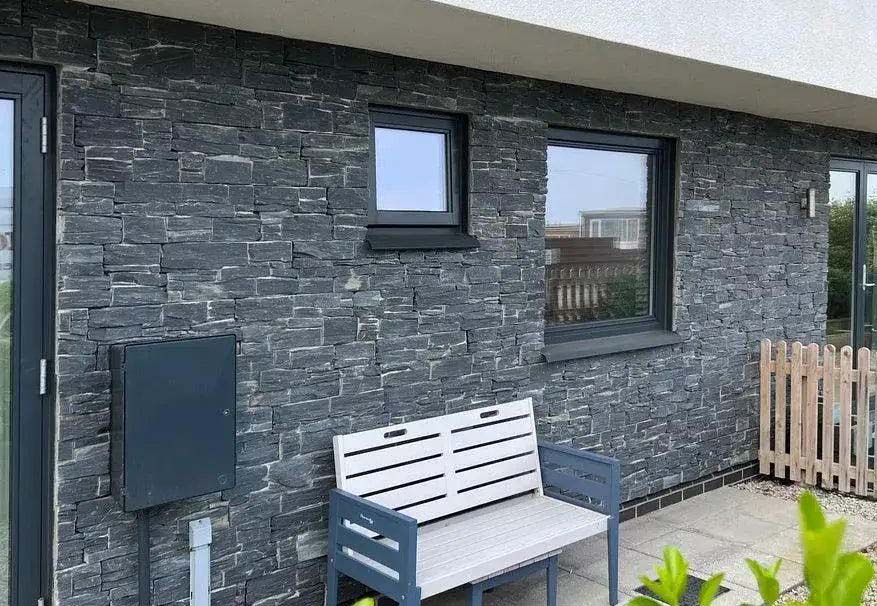
Beyond its looks, slate is a dense, hard-wearing stone with good resistance to frost, fading and everyday wear. However, performance varies by quarry and grade. Suitability depends on the particular slate’s durability, porosity and exposure conditions. Lower-grade slate can flake, delaminate or absorb moisture, particularly in freeze-thaw climates or areas with constant water exposure. Sourcing from a reputable supplier and confirming water absorption ratings helps ensure lasting results.
Best for: Feature walls, garden walls and outdoor architectural details such as fireplace surrounds, entryway accents, planter boxes, water features and pillar cladding.
Design tip: Slate’s textured surface catches light beautifully. Use accent lighting, such as wall washers or low-level garden spotlights, to emphasize its depth and shadow play after dark.
Care and maintenance: Applying a quality stone sealer helps reduce staining and moisture absorption, and also enhances the stone’s natural colour. Reseal periodically, depending on exposure. Clean with a soft brush and a pH-neutral cleaner, and avoid harsh acids that can dull the surface.
6. Sandstone Tiles: Warm, Natural Appearance
Sandstone has a soft, welcoming glow that suits Australian coastal homes. Formed from compressed layers of sand over millions of years, it often shows gentle banding, delicate grain and subtle tonal movement. Its palette of honey, buff, cream, terracotta and rusty red echoes beaches, cliffs and sun-bleached shorelines, and sits comfortably alongside timber, render and lush coastal planting.
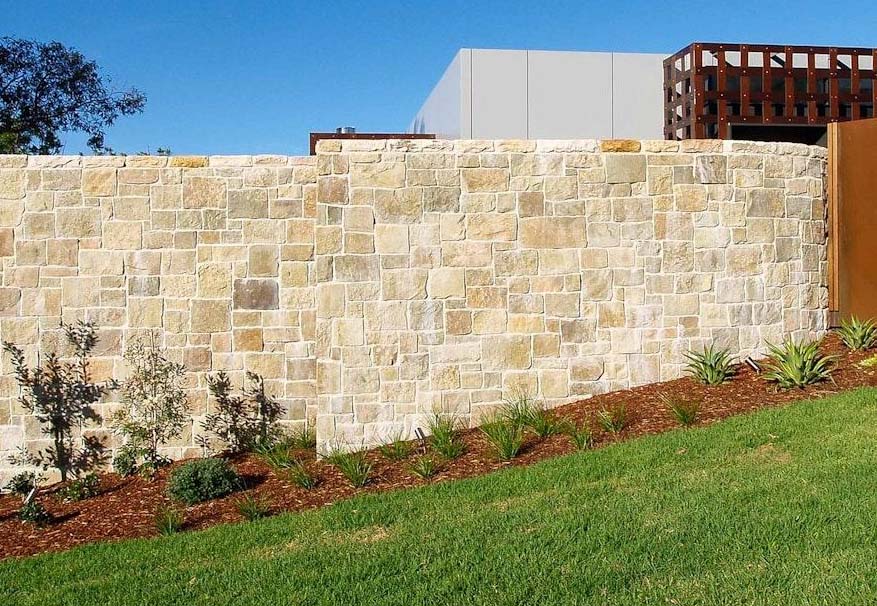
Sandstone is also a more porous stone than many alternatives, so it needs careful assessment before use. Moisture absorption and salt crystallisation can affect its durability, particularly in coastal settings. When salt-laden moisture enters the stone and dries, the salt crystals expand and can cause surface powdering, flaking or spalling over time. Performance varies widely between sandstone types, with denser, low-absorption varieties generally holding up far better than softer, more porous ones. Always confirm a particular stone’s absorption rating and its track record in marine environments before specifying it.
Best for: Selected exterior feature walls where the stone is confirmed suitable for coastal exposure. Sheltered or partially protected walls, entry features and courtyard walls are often good candidates, while areas with direct salt spray or constant moisture call for extra caution.
Design tip: Sandstone’s warm tones glow in morning and late-afternoon light. Pair it with soft white render, natural timber battens or black metal accents for a refined coastal look, and use warm-toned lighting to enhance its natural colour after dark.
Care and maintenance: Use a breathable, penetrating sealer suited to sandstone, as film-forming coatings can trap moisture and worsen salt damage. Ensure good drainage and a damp-proof course behind the wall, rinse away salt build-up with fresh water, and clean gently with a soft brush and pH-neutral cleaner. Avoid pressure washing and acidic products, which can erode the surface.
Professional Exterior Wall Tiling Services in Brisbane and the Gold Coast
At SuperiorTiling, we provide outdoor wall tiling, tile replacement and renovation services for homeowners, builders and property owners across Brisbane, the Gold Coast, Logan, Ipswich and surrounding areas.
Planning an outdoor wall tiling project in Brisbane or Gold Coast?
Contact SuperiorTiling to discuss your requirements and request a quote.
Why the Right Tile Adhesive Matters
Choosing high-quality tiles is important, but even durable materials can fail when installed with unsuitable adhesives. Exterior tiled walls are regularly exposed to heat, rain, humidity and temperature fluctuations. These conditions can place stress on the bond between the tiles and the underlying surface. For professional outdoor wall tiling-Brisbane or Gold Coast, adhesive selection should account for these conditions.
Under AS ISO 13007.1, cementitious tile adhesives are classified according to their performance. Common classifications include:
- C2: Improved cementitious adhesive offering enhanced bonding performance.
- S1: Deformable adhesive capable of accommodating a degree of movement.
- S2: Highly deformable adhesive designed to accommodate greater movement.
Depending on the wall construction and exposure conditions, a C2 S1 or C2 S2 adhesive may be appropriate.
However, the correct product should always be selected based on the tile material, substrate, installation height, environmental conditions and manufacturer’s specifications. A properly designed tiling system is just as important as the tiles themselves.
Grout and Movement Joints: Protecting Exterior Tiled Surfaces
Grout and movement joints may not be the first things homeowners think about when choosing tiles, but they have an important role in the durability of exterior wall tiling in Brisbane, Gold Coast or around Southeast Queensland.
Coastal conditions expose tiled walls to moisture, salt and temperature changes. Without suitable grout and movement joints, the tiled finish may become more susceptible to cracking and deterioration.
- Cementitious Grout: Improved cementitious grout classified as CG2 WA under AS ISO 13007.3 provides enhanced performance, including reduced water absorption. When suitable for the application and installed according to the manufacturer’s instructions, it can be a practical choice for exterior tiled walls.
- Epoxy Grout: Epoxy grout offers low water absorption and good resistance to staining and chemicals. However, not every epoxy grout is designed for prolonged sunlight exposure or significant temperature fluctuations. Before selecting epoxy grout for an outdoor project, confirm that the product is approved for those conditions.
Flexible Movement Joints
Exterior walls naturally expand and contract as temperatures rise and fall, and this constant movement puts stress on tiled surfaces. Movement joints allow the tiles to accommodate these changes, helping reduce the risk of cracking, debonding, and other installation problems. These joints should be positioned correctly, typically at changes in plane, where the wall meets floors, ceilings, or adjoining surfaces, and at regular intervals across large areas. They should be filled with compatible flexible sealants, such as polyurethane or silicone, rather than rigid grout, which cannot absorb movement and will crack under pressure.
Concrete joint sealing is equally important where the tiled wall meets a concrete substrate. Gaps or cracks in the underlying concrete can allow water to seep behind the tiles, weakening the adhesive bond and leading to efflorescence, staining, or loose tiles over time. Sealing these joints with a suitable weather-resistant sealant creates a continuous barrier against moisture and helps protect the structure beneath the tiling.
Movement joint detailing and proper concrete joint sealing are especially important for large tiled surfaces and walls exposed to direct sunlight, where temperature swings are greater and the demands on the installation are highest. Inspecting these joints periodically and resealing them when the sealant begins to crack, shrink, or peel will help keep the wall durable and watertight for years to come.
Surface Preparation and Waterproofing: Getting the Foundation Right
A good exterior tiling result begins before the first tile is installed. The condition of the wall underneath the tiles can affect the durability of the entire installation. Cracks, moisture problems, uneven surfaces and contamination should be identified and addressed before outdoor wall tiling (Gold Coast or Brisbane) begins.
It’s also important to remember that tiles and grout do not form a complete waterproofing system. Where waterproofing membranes or specific weatherproofing details are required, these must be compatible with the wall construction, tile adhesive and selected finish. Proper preparation helps reduce the likelihood of water ingress, loose tiles and avoidable repairs.
Exterior tiling work should also consider applicable National Construction Code requirements, AS 3958.1 and relevant manufacturer installation instructions.For coastal homes, these details are particularly important because exterior walls may face repeated exposure to moisture and changing weather conditions.
Which Exterior Wall Tiling Material Should You Choose?
There is no single tile material that suits every coastal property. The right choice depends on the wall’s exposure, construction, intended appearance and maintenance requirements. The following comparison can help you understand the main differences.
| Material | Suitability for coastal areas | Key consideration |
|---|---|---|
| Porcelain | Excellent when exterior-rated | Low water absorption and durability |
| Dense granite | Good when suitably tested | Weight and fixing requirements |
| Slate | Depends on the selected product | Porosity and weather resistance |
| Ceramic | Depends on the selected product | Must be approved for exterior use |
| Glass mosaic | Suitable for selected applications | Adhesive and temperature compatibility |
| Porous sandstone | Requires careful assessment | Moisture absorption and salt damage |
For many homes in Brisbane and the Gold Coast, exterior-rated porcelain tiles provide a practical combination of durability, design flexibility and relatively low maintenance. Natural stone can also be an attractive choice when the specific material is suitable for coastal exposure. Whichever option you prefer, proper installation and compatible waterproofing details remain essential.
Professional Exterior Wall Tiling Services in Brisbane and the Gold Coast
Choosing tiles for a coastal property involves more than finding a colour or finish that matches your home. The materials need to suit the wall construction, surrounding environment and intended application. Just as importantly, they need to be installed using the correct preparation and fixing methods.
At Superior Tiling, we provide professional tiling services for homeowners, builders and property owners across Brisbane, the Gold Coast, Logan, Ipswich and surrounding areas.
Our services include Brisbane outdoor wall tiling, tile replacement and renovation projects, with attention to material suitability, surface preparation and installation requirements.
Whether you’re updating an outdoor feature wall, replacing deteriorated tiles or planning a new exterior finish, our team can discuss suitable options for your project.
Planning an exterior outdoor tiling project in Gold Coast?
Contact Superior Tiling to discuss your requirements and request a quote for professional exterior wall tiling services in Brisbane, the Gold Coast and surrounding areas.
Photo References
- Featured Sandstone – corben.com.au
- Sandstone Tiles – artisanexterior.com.au
- Slate Tiles – pavingslabsuk.co.uk
- Glass Mosaic Tiles – goldenislatile.com
- Ceramic Tiles – tilesman.com
- Natural Stone – domelia.pl
- Porcelain Tiles – wankonceramics.com
Recent Post
- Preventing Mold and Grout Failure in Bathroom Shower Tiling: Epoxy vs. Cementitious Grout
- Homeowners Are Loving These Outdoor Patio Tiling Trends Right Now
- Licensed vs. Unlicensed: Why Your Tile Bathroom Contractor’s Credentials Matter
- Bathroom Tiles Replacement vs. Repair: Which Option Saves More Money?
- Swimming Pool Tilers’ Guide to Slip-Resistant Tiles for Steps, Ledges and Surrounds
- Energy and Water Efficiency Innovations in Renovation Tiling Willow Vale
- Quality Renovation Tiling in Pacific Pines for Residential and Commercial Properties
- Signs You’ve Found a Reliable Brisbane Northside Tiler That Locals Trust
- Low-Maintenance Wall and Floor Tile Renovation for Busy Homes
- Luxury & Character Shower and Bathroom Tile Renovations in Kalinga, Brisbane